Faith’s Pick
March 2025
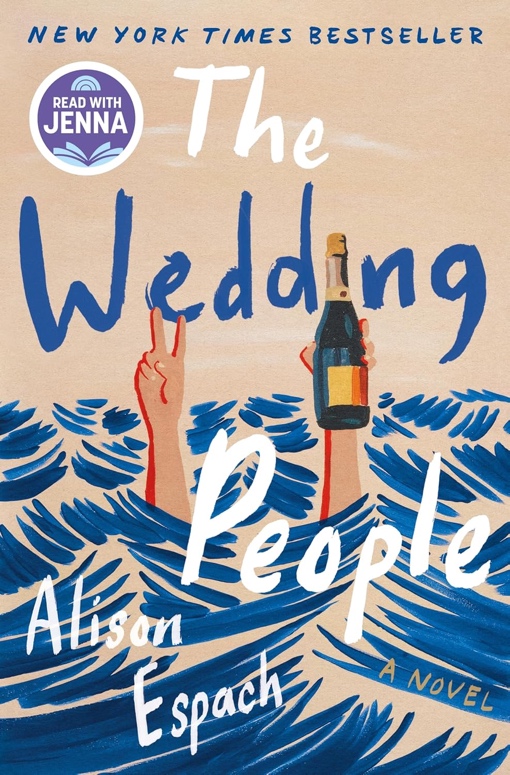
The Wedding People
Alison Espach
Henry Holt and Co., July 30, 2024
“Reader, I married him.” So Charlotte Brontë relays to us the details of Jane Eyre’s wedding to Mr. Rochester. One sentence to sum up the entire romantic plot. 19th-century literature professor Phoebe Stone muses on this succinct novelistic depiction of a wedding, among other Victorian examples, when she finds herself an unexpected guest at a lavish wedding at the Cornwall Inn in Newport, Rhode Island. She is, in fact, the only hotel guest who is not among the titular “Wedding People.” Phoebe arrives at this lavish wedding carrying far more (emotional) baggage than a wedding celebration (even one lasting six full days) should involve. This is not how she planned to visit the Cornwall – where she imagined slurping oysters and admiring the open ocean (which she, hailing from St. Louis, has never before visited). But it doesn’t take long for the bride, Lila, to fold Phoebe into her opulent orbit, whether Phoebe wants to be there or not.
The Wedding People is one of those rare novels that manages to be both sharply funny and quietly devastating at the same time. Alison Espach crafts a story that unfolds over the course of a single wedding weekend – or in Lila’s case, a full wedding week – yet feels expansive in its emotional depth.
The supporting cast—Lila; her groom, Gary; Gary’s young daughter, Juice (don’t call her Mel); Gary’s brother-in-law, Jim (still devastated by the loss of his sister – Gary’s first wife); and assorted guests—are drawn with an intoxicating mix of satire and compassion. No one is reduced to caricature. Instead, each character feels painfully recognizable, as though you’ve met some version of them at your own family gatherings.
What makes the book so compelling isn’t just the social spectacle of the wedding itself, but the intimate unraveling happening beneath the surface. Espach has a gift for exposing the awkward, painful, and often absurd moments that define human relationships—especially in high-pressure environments like weddings, where joy and heartbreak often sit uncomfortably side by side.
What stands out most is the author’s tone. She deftly balances biting humor with genuine tenderness. Just when a scene starts to veer toward cringe-worthy comedy, it quickly pivots into something unexpectedly poignant. The result is a novel that feels honest about the realities of loneliness, regret, and reinvention without ever becoming heavy-handed. Some readers may find the pacing introspective rather than plot-driven. But for those who enjoy character-focused fiction that lingers on emotional nuance, The Wedding People delivers.
Overall, The Wedding People is a smart, emotionally resonant novel about the strange intimacy of shared spaces and the possibility of change—even in the middle of someone else’s celebration. For, as Jane Eyre also told us and which Phoebe learns over the course of this novel, much to her great surprise, “There is no happiness like that of being loved by your fellow creatures, and feeling that your presence is an addition to their comfort.”